
How to Eat Korean Barbecue
The grill is in the table. Order one plain cut and one marinated cut, wrap a small bite in lettuce, and ask for rice when the meat slows down.
Updated October 24, 2026
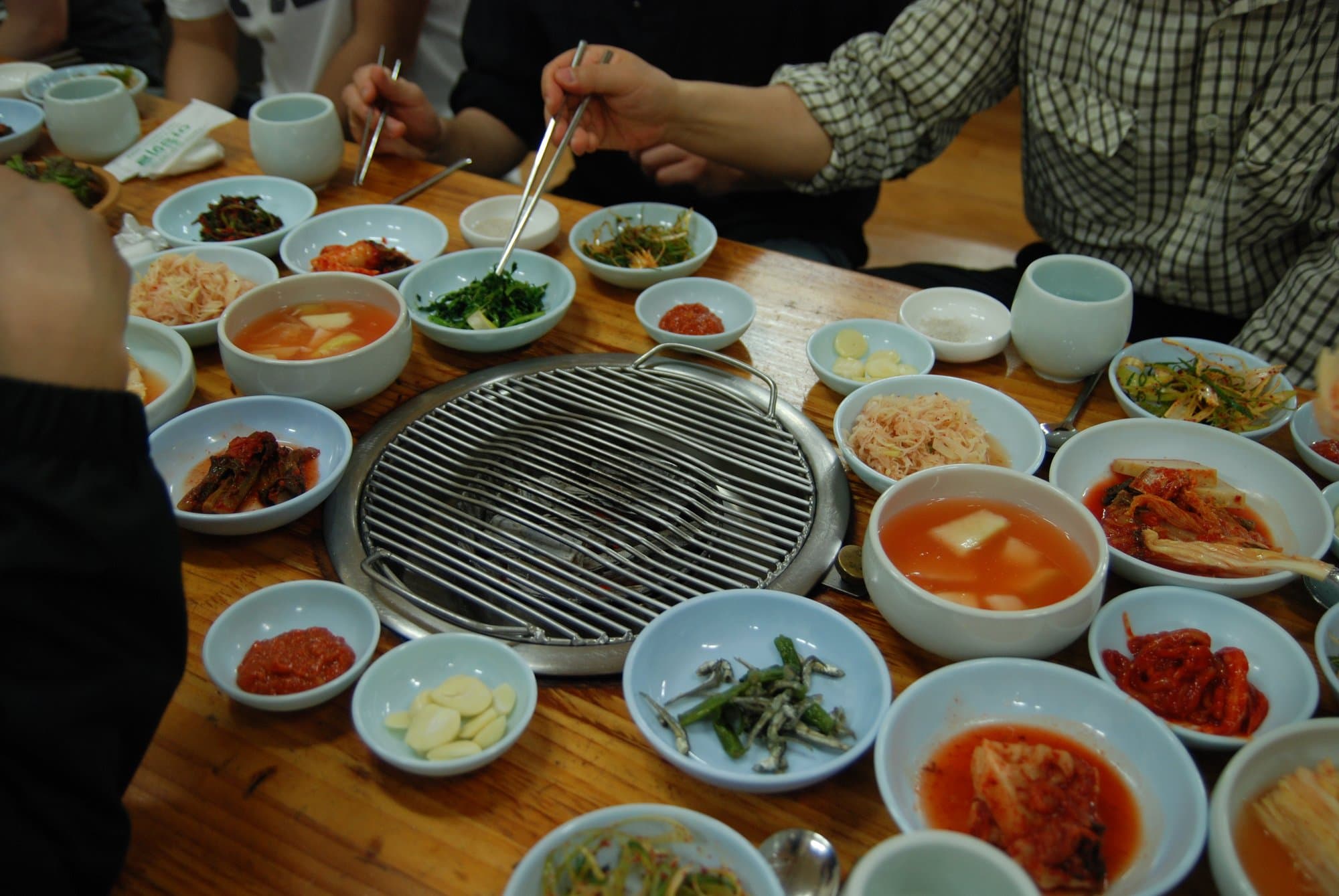
Photo by suksim. Licensed under CC BY 2.0. Korean barbecue table in Hoenggye, April 19, 2008. Resized for web.
The grill is already in the table. Pork belly arrives still raw, the fat in pale stripes, and beside it a basket of lettuce, a pair of tongs, and kitchen scissors.
While that first platter is still pale, see who picks up the tools. Maangchi, the Korean cook who has written out this restaurant meal, says the server usually lights the grill and turns the meat. The tongs are for when that person is at another table. If someone in an apron stays with the scissors, leave them there. If the tools sit in front of you, the table is cooking. Keep the pork on until the pink is gone. Once a piece browns, slide it to the cooler edge, or onto a plate, before it dries out, and cut it on the grill. A switch from pork to beef usually means a clean grate.
Soju is what most tables pour while they wait, clear and a little sweet. If someone older is sitting with you, their glass is filled first. Hold yours with both hands when they pour.
What to order
A pig on the sign is a pork house. A cow is a beef house. The menu charges by the serving, and one serving a person is the usual place to start.
Plain pork belly and a marinated short rib are enough for a first table. The belly is samgyeopsal, unseasoned, the fat still in stripes. If that looks like too much fat, moksal is the shoulder, and it is still plain. Short rib on a North American menu is usually LA galbi, cut thin across the bone and soaked in a sweet soy marinade. The older cut, soe-galbi, comes off the bone in a strip, takes the marinade, and goes back on. Bulgogi is the thin beef in that same soy. When the menu says saeng, the meat is plain. Yangnyeom means it has already been seasoned. Beef costs more than pork. Hanwoo, traced to one Korean cow, is an order you make in Korea.
One pork platter and one beef platter can share the table. Maangchi would rather pick pork or beef and stay there. If you do order both, the server changes the grill between them.
An all-you-can-eat menu in Los Angeles Koreatown usually comes with a clock. Two hours is a common limit, and meat left on the plate is often added to the bill. Ask before you sit. Send the next round only when the grill is clear.
The words on the menu
- Samgyeopsal (삼겹살): plain pork belly.
- Moksal (목살): plain pork shoulder, leaner than the belly.
- Galbi (갈비): short rib. LA galbi is the thin cross-cut in a soy marinade.
- Bulgogi (불고기): thin beef in a soy marinade.
- Saeng (생): unseasoned. Yangnyeom (양념): marinated.
- Ssamjang (쌈장): soybean paste and chile paste, for the wrap.
The wrap
Set a lettuce leaf in your palm. One piece of meat, a dab of ssamjang, a slice of garlic if you want it. Ssamjang is doenjang and gochujang stirred together, soybean paste and chile paste. A perilla leaf, kkaennip, can go on the lettuce first. It is grassy and a little like sesame. Green-onion salad, pajeori, goes in when the table has it. Fold the leaf and eat it in one bite. If you cannot close your mouth around it, take some of the meat back out.
A dish of sesame oil and salt is there for a piece you want plain. Some rooms set out thin pickled radish, and you wrap with that instead.
The small plates around the grill are banchan. Kimchi, pickled radish, and that onion salad are the ones to expect while the meat cooks. A wider table might also set down potato salad, braised beans, or a steamed egg. Rice comes later, so these are for picking at. Ask when a bowl is empty. Doenjang jjigae, a stew of soybean paste, often arrives with the meat. Sometimes it is on the bill.
When the grill slows
When the last pieces are resting at the edge of the grate, someone usually asks for rice. Order it then if it did not come with the meat. The table can share one bowl. If the soybean stew never arrived, kimchi jjigae is the one to ask for. Some people share naengmyeon instead, cold buckwheat noodles, after the grill has gone quiet. If you are already full, one bowl for the table is plenty.