
How to Host Shabu Night at Home
Thin beef, a light kombu broth, and ponzu or sesame at every place. Guests cook their own bites at one shared pot.
Updated November 10, 2026
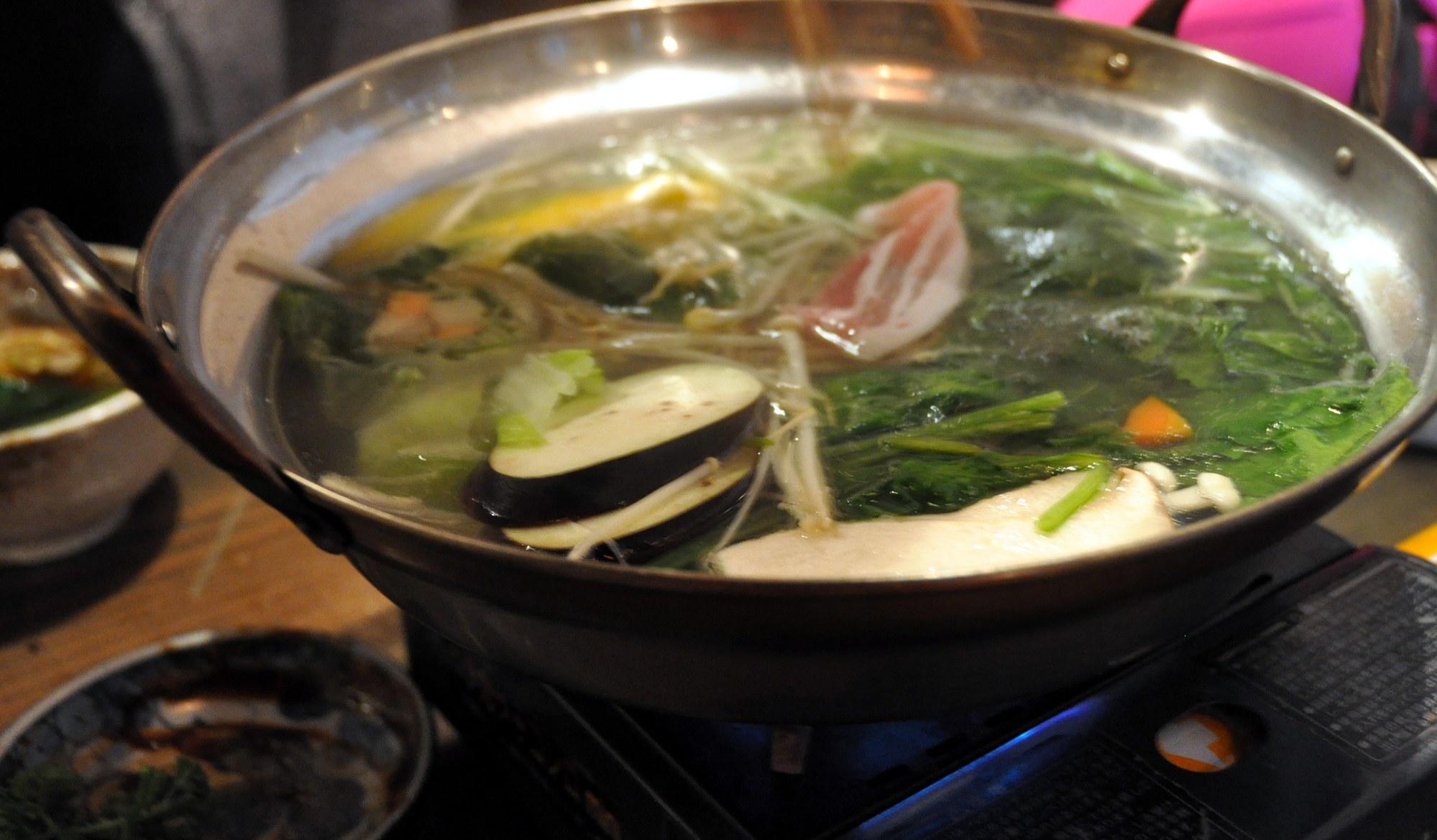
Photo by cyclonebill. Licensed under CC BY-SA 2.0. Cropped and resized for web
Someone lifts a ribbon of beef with chopsticks and draws it through clear broth. The slice turns gray-pink in a few seconds. It goes into a small bowl of ponzu, or into the thicker sesame sauce next to it, and then it is gone.
That soft swish in the pot is the whole night. Shabu-shabu (しゃぶしゃぶ) is Japanese onomatopoeia for the motion. The broth stays light on purpose. Seasoning happens in the dipping bowls, bite by bite, while everyone shares one pot.
What kind of night this is
Think of it as nabemono, the Japanese family of meals cooked in a pot at the table, on the light side. Guests cook their own bites. Your job is the burner, the cold platters, and the sauce bowls.
Four to six people fit one wide pot. Two proteins are plenty: beef and pork, or beef and tofu if someone skips meat. Once you know the rule, the grocery run is short. The meat has to be paper-thin. Everything else is arrangement.
An Osaka invention with a Chinese cousin
Shabu-shabu is younger than it tastes. In the early 1950s, Chūichi Miyake at Suehiro, the Osaka beef house that grew out of a Kitashinchi steak tradition, spent about two years working out a lighter way to eat good beef. Suehiro’s own history ties the idea to Chinese instant-boiled mutton, shuan yangrou, and to Kansai’s fondness for mizutaki, the “cooked in water” pot. The dish landed on the menu in the mid-1950s; company pages date the invention to 1952 and show a 1954 menu card.
The name came from the kitchen. Miyake heard staff rinsing hand towels, that rhythmic shabu-shabu sound, and decided the meat was getting a wash in the broth. Ichiro Miyake, who now runs the Suehiro line, told Japan’s Highlighting Japan magazine that the staff laughed when they first heard the name. Lines formed anyway. Suehiro still treats the sesame sauce as the house secret: sesame ground for hours, vinegar and soy balanced fresh each morning so the oil does not go dull.
Home tables got easier in 1969, when Iwatani sold Japan’s first hose-free cassette gas stove. JETRO’s Taste of Japan guide puts that portable burner at the center of modern nabe culture. Suddenly the pot could sit in the middle of the table without a gas hose across the floor. Sukiyaki, mizutaki, and shabu-shabu all moved into ordinary winter nights with that hardware.
Where it sits among other pots
Chinese hot pot often builds flavor into a seasoned broth. Chongqing and Sichuan tables run on chili oil and Sichuan pepper. Beijing mutton pots stay clearer, closer kin to shabu, though the dips and the way the meat is cut still feel different.
Sukiyaki is the dish people confuse with it. There the beef and vegetables simmer in a sweet soy-mirin broth, and many tables finish each bite in raw egg. Shabu keeps the pot nearly plain. You season after the swish, which makes the night easy on mixed spice preferences and on apartments that cannot take a mala fog.
The table kit
Put heat in the middle so everyone can reach. A portable butane or cassette stove under a wide metal pot is the classic home picture, the same silhouette as restaurant tables across Japan. Check the stove’s indoor rules, keep clearances honest, and crack a window. Portable induction with a compatible pot is cleaner if open flame makes you nervous. An electric hot pot works. A Dutch oven is usually too deep for easy communal cooking.
Give each person chopsticks for eating, a shallow bowl for cooked food, and two small sauce dishes. Keep a second pair of long chopsticks or tongs for raw meat, plus a fine mesh skimmer. Do not let raw-meat tools touch the ones people eat with. Japan’s food-safety guidance for shabu-style meals is blunt about that separation.
Minimum kit
- Tabletop burner or electric pot that holds a steady simmer
- Wide shallow pot (donabe, stainless, or hot-pot insert)
- Two sauce bowls per person, plus a plate for cooked bites
- Long chopsticks or tongs reserved for raw meat
- Fine mesh skimmer and a cup of water for rinsing it
Shop for thinness first
The butcher case decides the night. Japanese, Korean, and many Chinese groceries sell beef and pork already sliced for shabu-shabu or sukiyaki, often frozen in neat rolls. Aim for roughly a quarter pound per person, more if the table is hungry. Well-marbled chuck or ribeye is the usual beef buy. Pork labeled for buta-shabu is just as good, and often kinder to a weeknight budget.
If you only have a mainstream supermarket, ask the butcher for the thinnest ribeye they will cut, or partially freeze a steak and slice it yourself against the grain. Thicker hot-pot slices toughen before they cook through. Wagyu is lovely for a splashy night. For a first house pot, thinness still matters more than the grade stamp.
For the pot itself: a piece of kombu, water, napa cabbage, spinach or chrysanthemum greens if you can find them, Tokyo negi or the white of a leek, shiitake and enoki, a little carrot, and medium-firm tofu. Frozen udon for the finish. Short-grain rice on the side if people want a bowl while they cook.
Two sauces, and the bottles that help
Ponzu is the bright one: soy with citrus, often yuzu or a lemon-lime blend, sharp enough to cut fat. Goma dare is the creamy one: ground sesame with soy, a little sweetness, and enough body to cling to a hot slice. Set both out. Let people argue about which bite wants which bowl.
Bottled sauces make the night realistic. Mizkan’s Ajipon is the ponzu many Japanese home tables reach for; the company launched it in 1984 as a citrus soy meant for nabe. In the U.S., Mizkan sells Pon Shabu and Goma Shabu bottles for the same table, and its own shabu recipe leans on those. Kikkoman publishes a home method with its ponzu and a simple sesame sauce on the side. Either aisle works. Homemade goma from Japanese sesame paste (nerigoma) or a careful tahini mix is worth it when you have ten quiet minutes, less so when you are already behind on the cabbage.
Put grated daikon and sliced scallion next to the ponzu. A pinch of shichimi togarashi is optional heat. Sesame sauce thins as broth drips into the bowl. Whisk it, or pour a fresh splash, before it turns into a watery puddle.
How the pot actually moves
Soak the kombu in the pot of water for at least half an hour while you cut vegetables. Bring the pot up at the table. Pull the kombu just before a hard boil so the broth stays clear instead of turning slimy. Drop in tofu, cabbage cores, mushrooms, and other dense pieces first. Soft leaves wait.
Meat goes in when someone is ready to eat it. Swish twenty to thirty seconds, until the pink is gone. Leave it longer and the beef turns tough. Namiko Hirasawa Chen, writing for Just One Cookbook, suggests picking one person to cook the meat so servings land together. That tip alone keeps four chopsticks from fighting over the same slice.
Skim the foam as you go. Add water if the broth concentrates too hard. Keep raw platters cold and refresh them so a warm stack is not sitting out all evening. When the vegetables and meat have had their run, ask the table if it is time for shime, the close. Drop in the udon, or stir cooked rice into the remaining broth for a quick porridge. Some people crack an egg into the rice finish. Share it evenly. That last bowl is often the best thing on the table.
Before guests arrive
A day ahead, buy the meat and sauces, confirm the burner works, and soak nothing yet. The day of, cut vegetables into bite-size pieces, grate the daikon, portion the udon, and set two sauce bowls at each place before anyone sits. Start the kombu soak when the first guest text says they are close.
Restaurant shabu, especially all-you-can-eat wagyu rooms in U.S. cities, can run from the mid-forties into near a hundred dollars a person once tiers climb. A careful home table often lands closer to a casual grocery dinner once you own the burner. Put the difference toward better meat, or toward a second bottle of ponzu so nobody is scraping the last citrus from a shared dish.
When the udon is gone and the burner clicks off, leave the dishes in a soak. Sit for one more minute with whatever is left in the cups.