
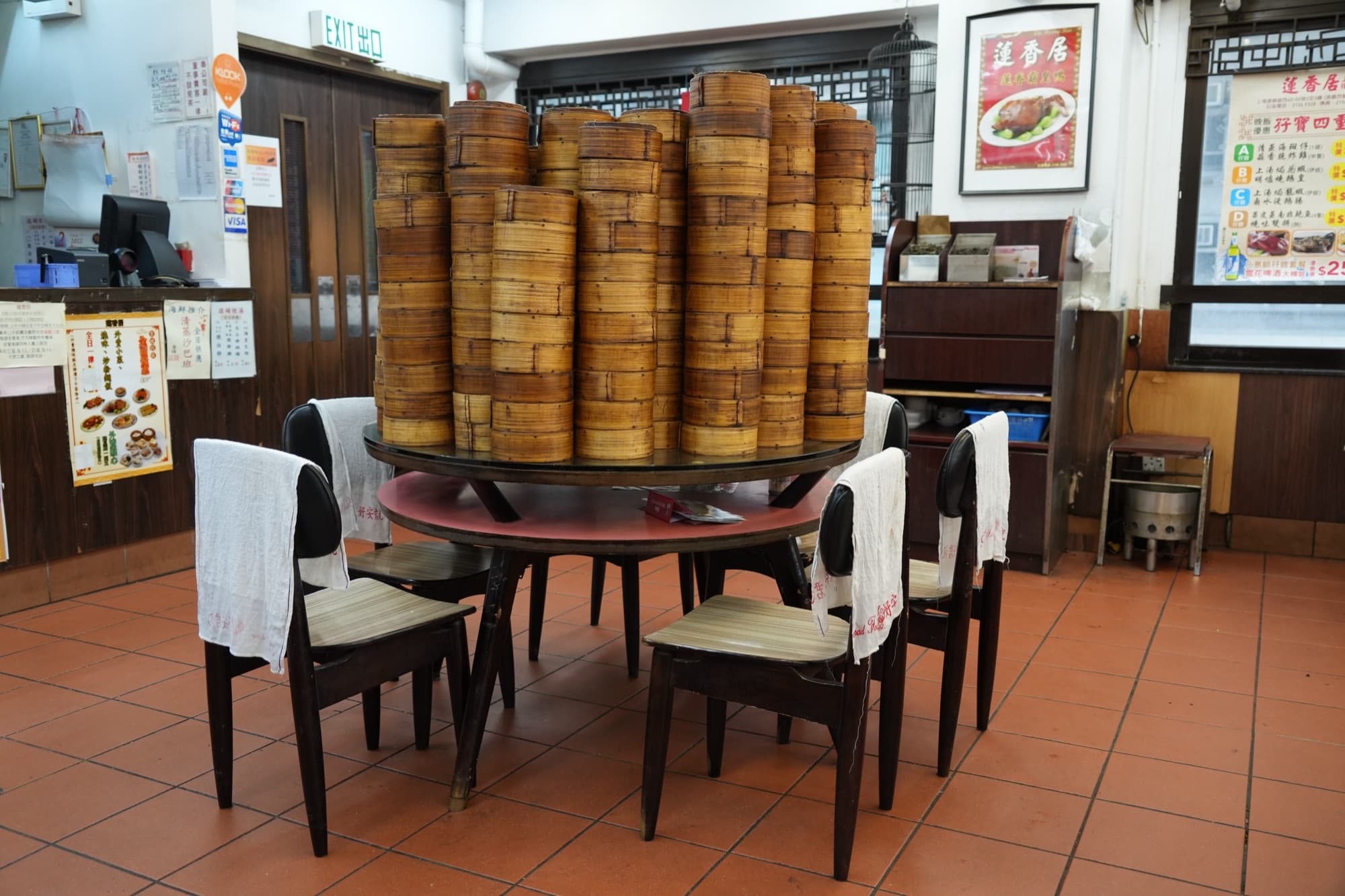
Photo by Peachyeung316. Licensed under CC BY-SA 4.0. Dim sum steamers at Lin Heung Kui, Sheung Wan. Resized and cropped for web.
Hong Kong Is Putting Tea Back Into the Night
Milk-tea raves and 24-hour dim sum are filling empty hours as restaurants struggle. Late teahouses and sober parties in North America already talk about demand, pricing, and alcohol-free nightlife.
November 3, 2026
In Hong Kong, a teahouse used to hold the evening as easily as the morning. Guests ordered tea, chased baskets, and stayed. That habit thinned. On October 29, the South China Morning Post refreshed an Isabelle Hon report on Cantonese restaurants under pressure, and the paper’s Hong Kong topics page framed the same story around milk-tea raves and night tea. For readers who like restaurants and soft nightlife here, the peg lands as a fair question: can tea own a night again?
Legislative Council figures cited by Hon show Cantonese restaurants and banquet halls falling from 1,790 in 2018 to 1,500 in 2025, about 16 percent, or nearly one fewer each week across seven years. Hon writes that at least 30 Cantonese places had closed in the first nine months of 2026 alone. Rents, thin margins, and dining habits remade after the pandemic years keep emptying rooms that once filled themselves.
Lin Heung Tea House is answering with hours and noise. Under new management with more than twenty years of Lan Kwai Fong nightlife experience, the century-old brand is treating the teahouse as a night venue again. Marketing director Yin Wong, who also produces electronic music, told SCMP the team adjusts each branch to its guests. Airport dishes run boneless and easier for visitors. Tsim Sha Tsui leans spicier for mainland diners. The bigger change is the clock. To revive what Hon calls the old tradition of night tea, the Tsim Sha Tsui and airport branches run around the clock, while the Sheung Wan flagship screens live sports on a nine-metre LED. Retro Cantopop parties and celebrity collaborations sit beside the steamers.
The late menu prices are public. Honeycombers notes that Lin Heung’s Tsim Sha Tsui dim sum runs from about HK$25 per item at lunch, then shifts to HK$48 across the board from 5 p.m. to 4 a.m. Time Out has covered the Kimberley Road room’s 24-hour trolley service and nostalgic DJ nights next to Knutsford Terrace. Reuters, via The Straits Times, reported a dim-sum rave at Lin Heung Lau with a disco ball, strobes, and a DJ mixing electronic music and Cantopop for roughly 300 people. Chairman Rocky Wong told Reuters the house relies on brand recognition in a downturn and keeps trying formats such as the rave to stay visible.
A few neighborhoods over, the rave arrives as milk tea. At Kam Shun Restaurant in Tai Wai, brothers Theo Ko, 23, and Lavitt Ko, 25, taped foam over the door, cleared tables for a turntable, and hosted milk-tea raves with beatboxing after taking over their parents’ 32-year-old cha chaan teng. Young Post reported that the idea came from viral coffee raves for people who want music without alcohol. “Foreigners might rave with coffee, but Hongkongers drink milk tea. Why can’t we blend them together?” Lavitt told the paper. Theo said callers now ask whether an event is on, and that the parties help younger diners find the shop. They had run three raves by June 2026 and hoped for one every two months. In Hon’s SCMP piece, Lavitt comes back to something quieter: the waitress who remembers what regulars want without a word.
Daytime milk-tea parties belong to the same experiment. The Standard reported that Silk, a Hong Kong milk-tea brand launched in 2022, threw a daytime party with DJ Baby J built around its drinks instead of coffee. Sonia Lau, Silk’s chief of staff and marketing director, told the paper no one in the city’s boba trade had done it yet, so they wanted to be first. Social Club Series co-founders Sandy Lam and Isaac Woo have been placing coffee raves in off-peak restaurant hours for exposure and short-term income. Woo told SCMP in June 2025 that ordinary clubbing left them wrecked for Monday, and that afternoon parties let people dance, eat dinner, and still go home at a reasonable hour.
The piece that can travel is practical. Tea or coffee holds the night. A DJ is welcome. Alcohol does not have to. The bill is built for lingering. North American operators are already saying versions of that in print.
In Los Angeles, the Los Angeles Times reported in May 2025 that late teahouses were opening for a younger crowd that drinks less, while the city had lost nearly 100 restaurants open past 10 p.m. since 2019, per LAist. Salanya Angel Inm opened Jai Tea Loft above her family’s Koreatown bar, Thai Angel, as a quieter late room for creatives who were tired of nights built around alcohol. On Free Flow Fridays and Saturdays, Jai’s site prices unlimited tea by stay: $10 for up to 30 minutes, climbing to $45 for unlimited time, from 7 p.m. to 1 a.m. Inm told the Times she wants people to feel they can swing the experience without treating wellness as a luxury purchase. A storytelling night she hosted was ticketed at $10. Guests stayed talking until 3 a.m.
Downtown, Bu Tea Den runs as an RSVP-only, alcohol-free tea speakeasy inside a warehouse. Co-founders Natalie Tran and Severin Sauliere told L.A. TACO they paired tea with their art installation during Dry January after learning gong fu brewing in Portland. They still keep day jobs, so the den opens Fridays through Sundays in the evening, for roughly twenty people at a time. The FAQ prices Bu Tea Call, the Friday DJ series, at $25 for two guests, with house tea and light snacks included. Tea Association of the USA president Peter Goggi told L.A. TACO that millennials and Gen Z often turn to tea in place of alcohol, and that teahouses help friends bring friends into the category.
Toronto’s Coffee Party shows how loud the ticket math can get. Co-founders including Zohaib Aziz and Matt Campoli launched sober daytime parties with DJs, unlimited coffee, and pastries. Secret Toronto reported early tickets around $20; other coverage put early prices near $15. Campoli told the site the event was budget-friendly and sober-focused, built so people leave recharged with the day still ahead. Aziz told Sprudge he still wanted dancing and meeting strangers, just not around alcohol. By May 2026, Toronto.com listed festival tickets at $30, or $55 with a morning workout. Axios reported Eventbrite’s “coffee clubbing” category up 478 percent year over year in 2025, with tickets typically under $60.
Hong Kong’s night tea comes from yum cha that keeps going after the lunch carts stop, older than the coffee-rave fad. Milk-tea raves and dim-sum DJ nights are new tools on that habit, aimed at empty hours and younger feet. In Los Angeles and Toronto, operators have already priced evening tea rooms and daytime sober parties on their own. People still want a room, some music, and a reason to stay out. A modest ticket or a timed tea fee covers it. Whether a North American restaurant can fill a Tuesday at midnight the way Lin Heung fills Kimberley Road is still an operator problem. The softer nightlife those rooms describe is already here.