
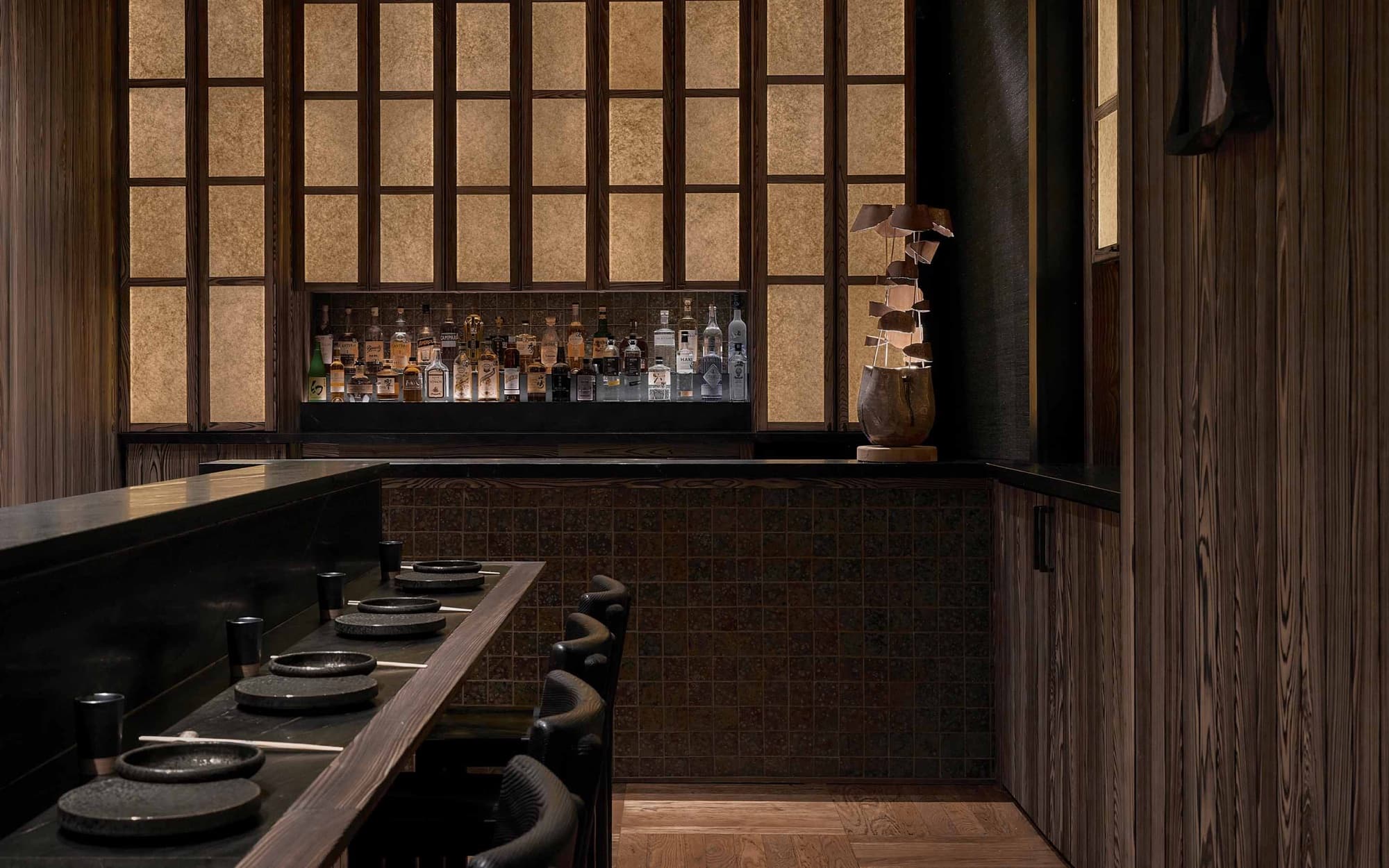
Photo by Giulio Ghirardi. Licensed under Courtesy Kelly Wearstler / Austin Proper Hotel. Press photography of the Kappo Kappo dining room. Resized for web.
Austin’s Kappo Kappo Got a Star. Here Is What Kappo Means.
The 2026 Texas Guide gave the Austin Proper counter One Star in its first year. Twin chefs Haru and Gohei Kishi cook a French-Japanese tasting that mixes raw and cooked courses, the kind of night American diners often book as omakase.
November 4, 2026
On October 8, the MICHELIN Guide Texas named Kappo Kappo a new One Star restaurant, one of three fresh stars in the 2026 selection. The French-Japanese counter inside Austin Proper Hotel opened November 28, 2025, and earned the star in its first year. Twin chefs Haru and Gohei Kishi, born in Paris to Japanese parents, reunited in Austin after cooking across Europe, Asia, and the United States. Inspectors put the best seats at the L-shaped counter and told diners not to assume a typical hushed omakase. Guests chat. The brothers talk through their French-Japanese plates while they cook.
Omakase means you leave the menu to the chef. In American cities that word often stands in for a nigiri counter. Kappo is a different shape. Michelin’s dining explainer defines it as “to cut and to cook”: a small counter where the chef cuts, grills, simmers, and plates in front of you, moving between raw and cooked courses. Haru Kishi told The Adventurist the house leans on that tradition so the night can run broader and hotter than sushi alone, with wagyu carrying a large share of the heat and technique.
The restaurant’s FAQ lists a nine-course omakase at $195 a person, plus tax and a 20 percent service charge, for about two hours. OpenTable also posts a five-course Wednesday menu at $95. Fifteen seats sit at the counter and ten at tables. Dinner runs Tuesday through Saturday, with two seatings midweek and three on Friday and Saturday. The house asks for smart casual dress, bars children under twelve, and says it cannot accommodate dietary restrictions or substitutions, so read the FAQ before you pay a deposit. Sake and wine pairings are available; a la carte drinks cover cocktails, Japanese beer, French wine, and sake.
Michelin’s inspector write-up sketches the early courses. Dinner opens with a gougère filled with nori emulsion, topped with A5 wagyu and toro tartare and a spoon of osetra caviar. Chawanmushi follows, then sashimi, then a bento that includes a Texas grapefruit terrine. The Infatuation’s February review fills in the cooked middle as smoked beef-cheek bourguignon under potato foam, then Japanese and Texan wagyu side by side with pickles, and counts only a couple of sushi bites across the night. Come for heat and sauce as much as for raw fish.
Kelly Wearstler designed the Proper Hotel room around the counter: charred cypress, lit millwork screens, stone tables, and fifteen seats facing the work. In an OpenTable feature last December, Haru said the restaurant is built on conviviality and on closing the gap between guest and chef. Michelin’s notes describe the same lively counter. Ask for those seats if they are open; tables get the same menu without the front-row view.
Confirm prices and seatings on the restaurant’s page the week you go. The market moves, and a starred first year can tighten the calendar. At Kappo Kappo, omakase means cut-and-cook work on an L-shaped rail: a savory gougère beside chawanmushi, sashimi before bourguignon, and wagyu finished where you can watch it.