
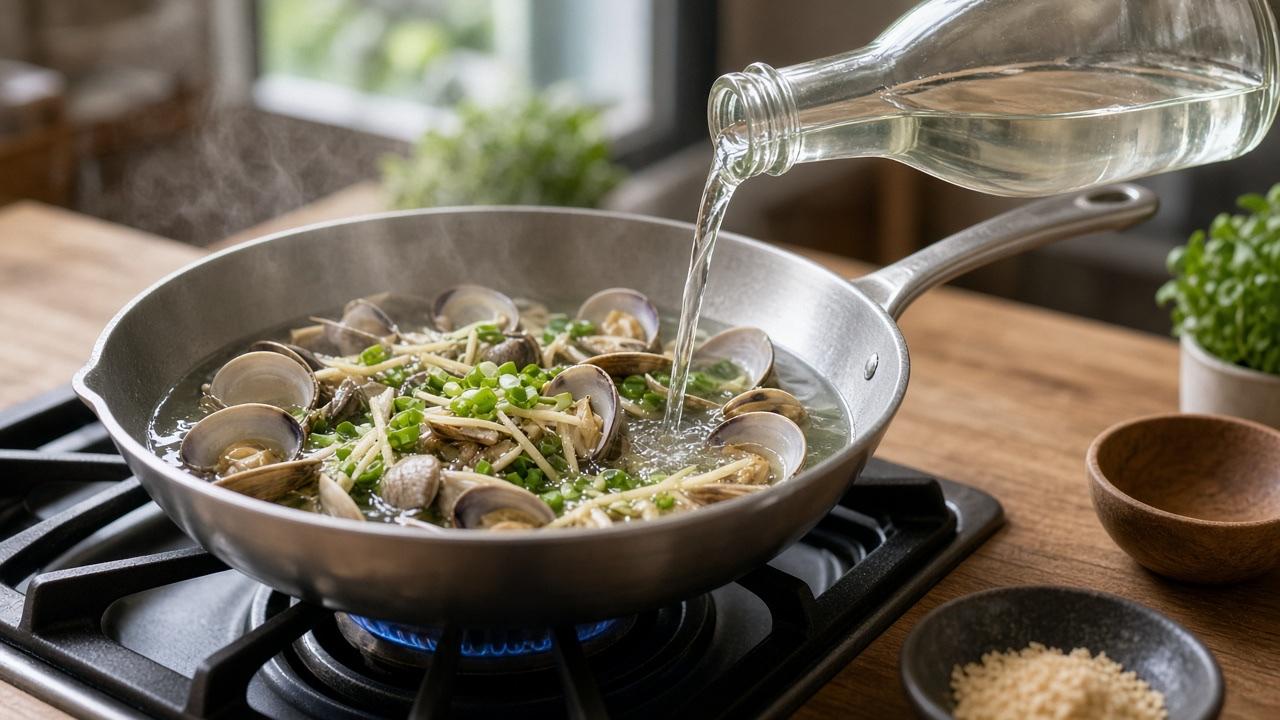
Photo by East Table. Licensed under Editorial. AI-generated editorial illustration of sake steaming clams; no brand logos.
The Sake in Your Pantry Can Do More Than Go Into a Marinade
Emiko Davies’ The Japanese Pantry puts sake in the cooking chapter. Three published recipes show what it does when you steam with it, simmer it into a sauce, or loosen browned flavors in the pan.
November 18, 2026
Most home cooks meet cooking sake in a marinade, lined up with soy and mirin. Emiko Davies’ The Japanese Pantry, published by Smith Street Books in October 2025, gives the bottle its own chapter among seven pantry staples. In a November Financial Times piece drawn from the book, she calls sake “pure umami,” quieter than miso or soy. She also says a splash tastes sweeter and more savory than wine when it stands in for that Western pour.
The FT notes that sake can tenderize meat and quiet strong smells on fish. Heat decides the rest. Three published recipes show what happens when you steam food in it, simmer it into a sauce, or pour it into a hot pan after something has browned.
Steam with the food
Under a lid, sake cooks as vapor and finishes as broth. Davies told the FT to use a splash for clams or mussels the way a cook might reach for white wine. Namiko Hirasawa Chen’s Just One Cookbook recipe for asari no sakamushi, sake-steamed Manila clams, writes the method out: clams in a single layer, about three-quarters of a cup of sake, ginger, and a seeded dried chili. Cover the pan and steam until the shells open.
The raw edge of the shellfish softens. Clam liquor and sake reduce together into a juice worth spooning back over the meat. Nothing marinates first. The bottle goes straight into the pan.
Simmer into a sauce
A longer simmer cooks the alcohol off and leaves body in the pot. In Davies’ umeboshi-braised chicken from The Japanese Pantry, reprinted in the FT, about a quarter cup of sake goes in with salt-pickled plums, sugar, and ginger. The sharp fruit settles into the meat. On Just One Cookbook, Namiko’s kinmedai nitsuke builds a fish simmer from sake, mirin, sugar, and soy, then bastes the fish as the liquid tightens.
Sake stays in that sauce. It rounds the soy and sugar so the glaze is more than salty-sweet, and it helps the liquid cling. Davies’ Substack note on the book puts the familiar trio plainly: soy for savor, mirin for sweetness, sake for umami. You taste the three of them once the pot has had time.
Loosen what browned
After a hard sear, brown bits stick to the pan. A splash of sake lifts them into a short sauce. Davies points to butter-seared scallops in the FT. Nigella Lawson’s Cookbook Corner lists Scallops Cooked in Butter and Sake among the recipes she pulled from The Japanese Pantry. Pour, scrape, and the stuck flavor dissolves into the liquid.
Davies told the FT that sake reads sweeter and more umami than wine in that job. The sear stays. The brown bits come back onto the plate as sauce.
One bottle, three jobs
Use a drinking sake you do not mind cooking with, or a clean cooking sake if that is what sits on the shelf. Reach for steam when you want vapor and a light broth, a simmer when soy and sugar need company, and a quick pour when the pan already holds browned flavor.