
Why Lotus Root Stays Crunchy or Turns Soft and Starchy
Cultivar, harvest timing, and cut decide more than counting holes. How to buy for stir-fries, salads, and long soup, fresh or from a vacuum pack.
Updated November 10, 2026
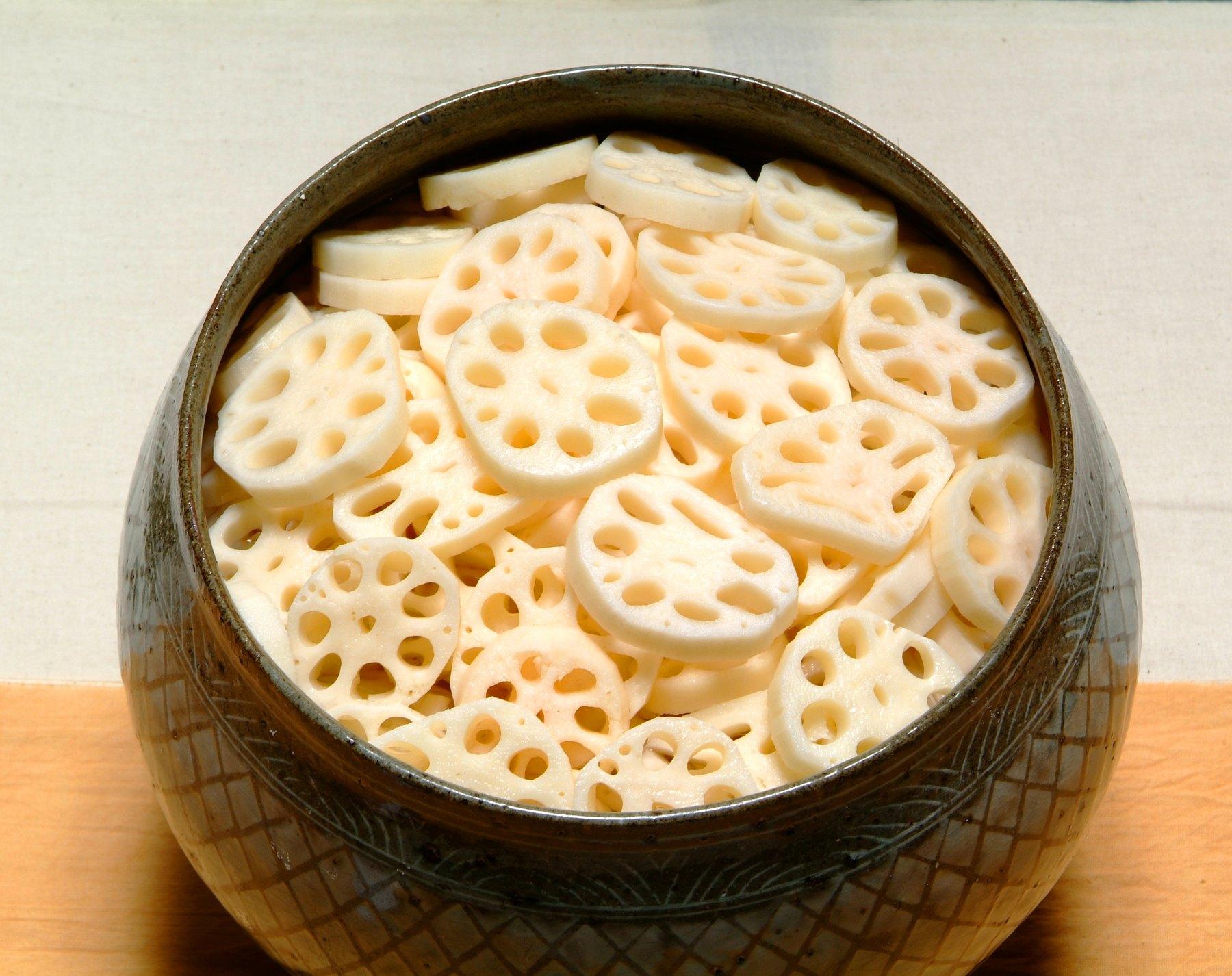
Photo by wizdata. Licensed under CC0 1.0. Resized for web.
Lotus root looks like a pale tube with lace inside. Slice a round and you see the air channels that let the plant breathe under mud. In Chinese kitchens it is lián’ǒu (莲藕). In Japanese it is renkon. In Korean, yeongeun. The useful question at dinner is smaller: do you want snap in a stir-fry or salad, or soft, floury pieces in a long soup?
Both textures are available. They come from the variety, how long the rhizome sat in the mud, and how you cut and cook it. Counting the holes at the supermarket is a folk trick with a long life online. Breeders in Wuhan keep saying it does not work.
Skip the hole count
Those openings are air tissue, not a grade stamp. Liu Yiman, writing for the Chinese Society for Horticultural Science’s aquatic vegetable branch, describes a typical well-developed cross section as seven larger holes around the edge and two smaller ones. Sometimes a small hole is faint, so a shopper counts seven. Sometimes the center shows extras, so someone counts ten. The same stick can look different from node to node.
Xinhua’s science desk said in 2023 that hole number and texture have no direct link. Wuhan’s agricultural bureau has said the same. Ke Weidong, a lotus-root breeder at the Wuhan Academy of Agricultural Sciences, told Jimu News that short versus long segments also fail as a sure test. Ask for fen ou (粉藕), the floury soup type, or cui ou (脆藕), the crisp type. If the seller has no label, weigh shape and feel, then cook with the dish in mind.
What changes the bite
Chinese markets sort by mouthfeel. Crisp lotus root holds more water and less starch. Floury lotus root carries more starch and turns soft and powdery in a long simmer. A 2023 Foods study compared floury Elian No. 5 with crisp Elian No. 6 from Hubei fields: under heat, Elian No. 5 softened more; Elian No. 6 stayed firmer. Wuhan growers still name those numbers. Elian No. 6 is a common crisp frying root. Elian No. 5 is the soup-leaning cultivar people reach for with pork ribs.
Harvest timing matters too. Japan’s agriculture ministry notes that Ibaraki, around Lake Kasumigaura, ships more than half the country’s renkon. Dig in summer and the flesh stays crisp and juicy. Leave the rhizome in the mud after the tops are cut and starch builds, so winter renkon eats softer. Thick, short-segmented Kaga renkon from Ishikawa is the starchy Japanese type used for steaming and sticky binders.
Buy for the dish
For stir-fries and cold salads, buy crisp lotus root. When you can compare, longer, lighter segments with smoother skin often lean that way. Slice thin, about 2 to 3 millimeters for hot pot or a quick toss. Cut a little thicker if you want more chew. High heat and a short cook keep the snap.
For pork-bone or rib soup, buy floury lotus root when the market labels it. Otherwise choose shorter, heavier, rougher segments and plan a long simmer. Cut thick chunks, about two centimeters or more, and put them in with the bones early. Ke Weidong’s tip helps when you can nick an end: a cut that weeps a lot of white juice often leans floury. Give it time. The pieces soften and the broth picks up a faint sweet thickness.
For hot pot, add thin crisp slices late and eat them within a few minutes. Left too long, they soften and cloud the broth.
At the Asian grocery
- Ask for crisp or floury (cui ou / fen ou) before you trust hole folklore
- Whole fresh sticks: firm, heavy for size, no soft bruises; sealed ends keep mud out of the channels
- Vacuum packs: peeled or sliced in brine; rinse well, then cook soon
- Frozen slices: fine for soup and braises; expect less snap than fresh crisp root
Fresh, packaged, and the vinegar bowl
Whole fresh lotus root keeps a few days wrapped and cool. Once you peel and slice it, the cut faces brown the way a cut apple does. Enzymes in the flesh meet air and the surface turns gray-brown. The color shift is cosmetic. For a salad or a quick fry, drop the slices into cold water with a splash of rice vinegar or lemon juice so they stay pale. Serious Eats and Japanese pickling methods both use that acid bath.
Skip a long vinegar soak when you want floury soup. Gudu’s ingredient notes say the acid keeps pieces whiter and crisper, and a Wuhan rib soup wants the opposite. Rinse packaged slices, then cook. The brine is for shelf life.
Lotus root grows in mud and water. Cook it through.
What to cook first
To start, we recommend one clear job. Buy crisp root, slice it thin, soak it briefly in cold vinegar water, and stir-fry it hot with a little soy and garlic, or fold the same thin slices into a cold salad. When you want soup, buy floury root if you can find it, cut thick, and give it the full simmer with bones.
The holes will still look handsome on the plate. Texture comes from the variety, the season, and how long the pot runs.