
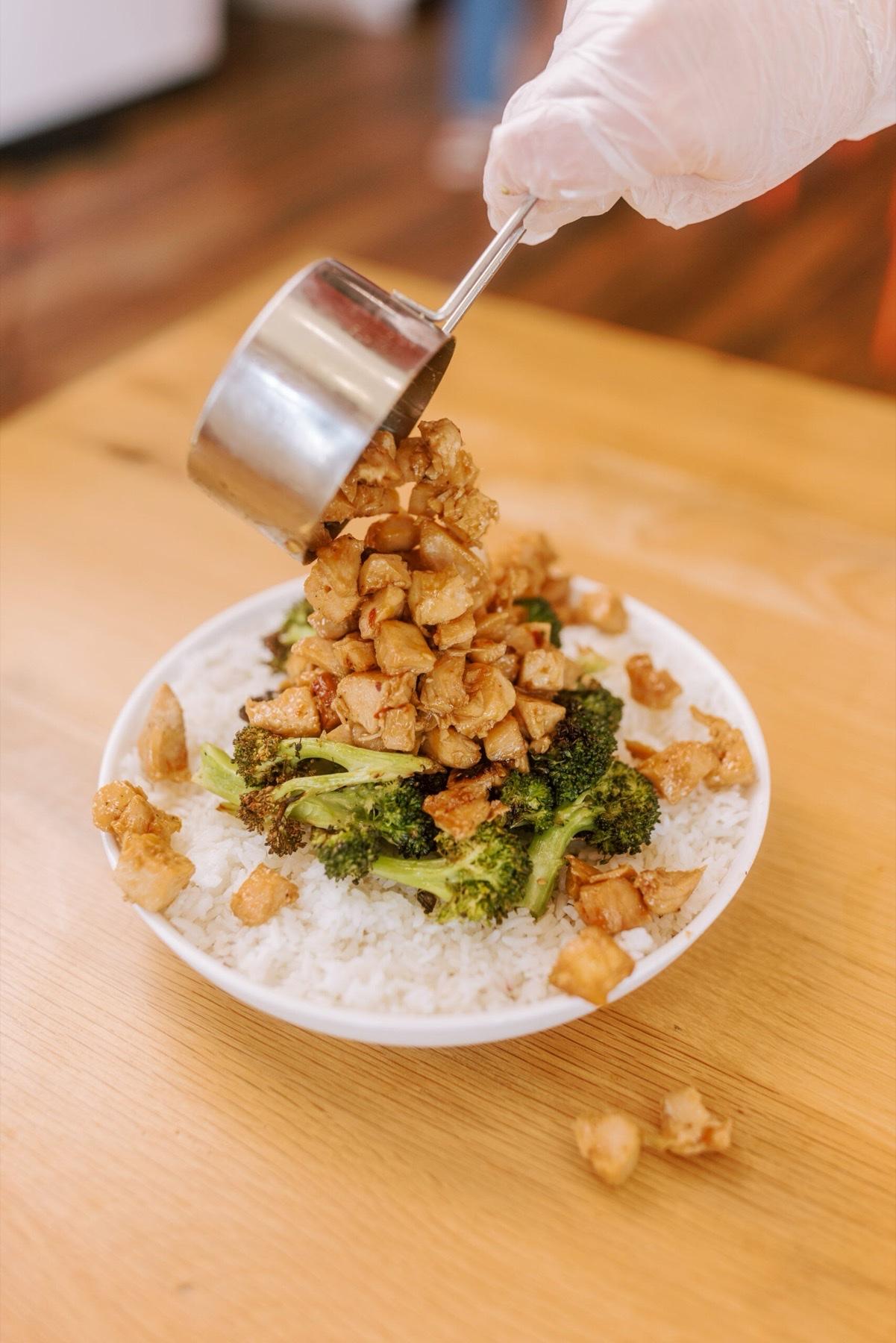
Photo by Bibibop Asian Grill. Licensed under Courtesy Bibibop. Brand photography of a build-your-own bowl. Resized for web.
The Asian Restaurant Chains Expanding America’s Everyday Dinner Options
Nation’s Restaurant News published a 20-chain Asian watch list on November 4. Ippudo, Jinya, KPOT, and Bibibop show four different ways those dinners scale, from a $11 bowl to an all-you-can-eat grill.
November 6, 2026
Nation’s Restaurant News published a Watch List of 20 standout Asian chains on November 4, timed to the Culinary Institute of America’s Worlds of Flavor conference. Senior food editor Bret Thorn framed the package around East and Southeast Asian restaurants that already shape how Americans eat out, some born here and some imported. The slideshow cover names four of them together: Bibibop, Ippudo, Jinya, and KPOT. Those four cover different dinner formats. One is a careful Japanese ramen room. One franchises ramen into suburbs. One sells all-you-can-eat Korean barbecue and hot pot. One turns bibimbap into a fast-casual line.
Ippudo is the specialist. Shigemi Kawahara opened the first shop in Fukuoka in 1985; the East Village room arrived in 2008 as the brand’s first U.S. home for Hakata-style tonkotsu. The U.S. map stays tight: full Ippudo rooms in New York and California, plus spinoffs such as Kuro-obi takeaway in San Mateo and Gogyo in Gramercy. The Midtown Westside location closed August 9 and is scheduled to reopen nearby in spring 2027. Culver City is the newer Los Angeles bowl. On Ippudo’s California online menu, Shiromaru Classic is $19, Akamaru Modern $21, and Karaka Spicy $23. A bowl lands in destination-ramen territory, with room for an izakaya side if you want one.
Jinya Ramen Bar plays the same category at franchise scale. Founder Tomo Takahashi opened in Tokyo in 2000 and brought the brand to Studio City in 2010. The franchise page now lists more than 75 locations open and more than 170 in development, with an average unit volume near $3 million for reporting stores in its FDD summary. xMap counted 67 U.S. restaurants as of mid-July, with Texas the densest state. The Carrollton, Texas, menu posts Jinya Tonkotsu Original 2010, Tonkotsu Black, and Premium Tonkotsu Red at $17.80 each, chicken ramen at $16.80, and birria ramen at $18.80. The board also runs gyoza, crispy rice, and small plates. The dinner is a broader American ramen bar, built for multi-unit developers who want that format outside coastal cities.
KPOT Korean BBQ & Hot Pot sells time at the table. Guests pick Korean barbecue, hot pot, or both, then cook at the grill and the burner. Vertex Hospitality owns the brand, which started in East Brunswick, New Jersey. KPOT’s site says more than 100 restaurants are open and more than 50 are on the way; NJ Biz recently put the count above 120. At the Charlotte location, adult lunch runs $21.99 and dinner $32.99, with both formats another $5 per person, a two-hour limit, and a shared hot appetizer and sauce bar. Dinner for two with both options lands near $76 before drinks. The ticket buys volume, a grill, and a hot-pot burner for the table.
Bibibop Asian Grill is the weekday counter. Gosh Enterprises, the parent behind Charley’s Philly Steaks, built the concept around customizable Korean-inspired bowls that the brand markets as gluten-free. The newsroom called Canton, Michigan, the 82nd location when it opened November 5, after East Lansing and Westfield, Indiana, in late October. On the Canton Grubhub menu, a build-your-own bowl starts around $11.29; the Fan Favorite chef bowl is $12.49. Rice or noodles, a protein, and free toppings land near fast-casual lunch money, aimed at lines and family packs on a weeknight.
Read the four together and the price ladder shows up. A $11 Bibibop bowl fits a Tuesday. A $19 Ippudo Shiromaru asks for a slower night. Jinya sits between them on price while multiplying rooms through franchising. KPOT turns Korean barbecue and hot pot into a priced buffet format that can open in secondary markets without a celebrity chef. NRN’s longer slideshow also folds in Baekjeong, Bamboo Sushi, Kura Sushi, Pepper Lunch, Thai Chili 2Go, and others. The November 4 list maps formats already filling American weeknights and weekends, with recognizable doors and posted prices.