
Donko vs. Koshin: How to Buy and Rehydrate Dried Shiitake
Donko is the thick, curled cap. Koshin is the flatter, thinner one. Buy by shape, soak cold in the fridge, and keep the soaking liquid for the pot.
Updated November 10, 2026
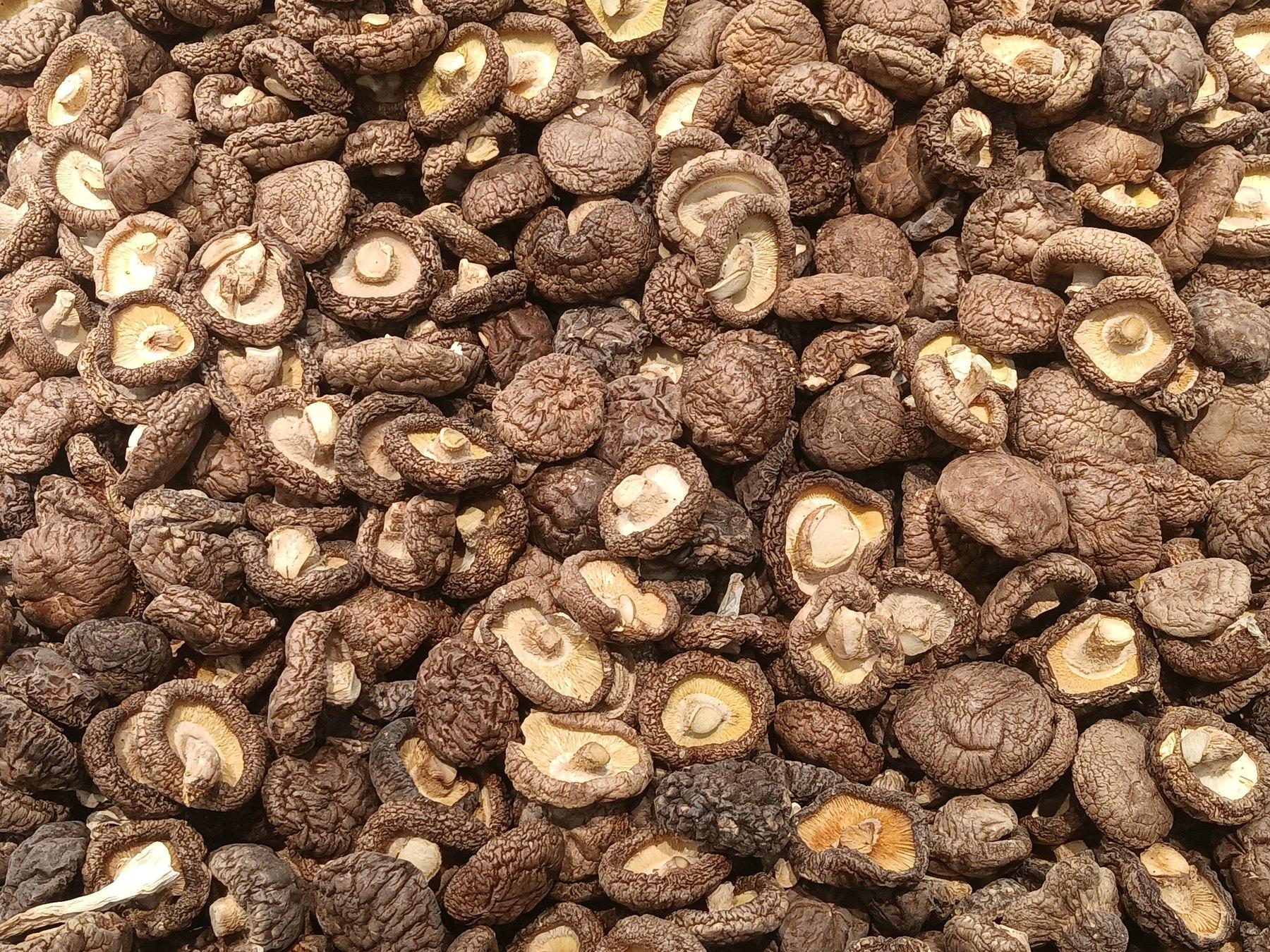
Photo by François Nguyen. Licensed under CC BY 2.0. Resized and lightly cropped for web.
Dried shiitake bags at the Asian grocery rarely explain themselves. Some caps sit thick and rounded, with the rim still curled under. Others are flatter and wider, like an open umbrella that got pressed dry. Japanese graders call those shapes donko (どんこ, 冬菇) and koshin (こうしん, 香信). Same mushroom, different harvest timing, then dried.
Our Dashi Basics guide already puts dried shiitake next to kombu for a vegetarian stock. This piece is about the bag on the shelf: which shape to buy, how to soak it, and what to do with the caps and the liquid once they are soft.
What the words on the bag mean
Japanese labeling rules split the grades around seven-tenths open. Pick earlier and the dried mushroom can be sold as donko: thick flesh, a rounder look, and an edge that still wraps under the cap. Pick later and it is koshin: thinner flesh, a flatter face, usually a wider span. Sugimoto Shiitake in Miyazaki puts it simply for English cooks. Donko chews more. Koshin slices easier and softens sooner.
You may also see koko or kōko (香菇), an in-between grade the Oita Prefecture Shiitake Agricultural Cooperative describes as thicker and larger than ordinary donko. Hana donko, also called tenpaku donko, is a premium donko whose cap cracked into a pale flower pattern in cold, dry weather. Lovely if you find it. Skip it for Tuesday night.
Plenty of bags outside Japan never print those words. Then buy with your eyes. Thick cupped caps when you want chew. Flatter ones when you want even slices.
Where each shape belongs in dinner
Save donko for dishes that leave the mushroom visible. Japanese nabe, Chinese braises, simmered shiitake in soy and mirin, a whole or halved cap next to rice. The thicker flesh is the point. Oita’s co-op sends donko toward hot pot and Chinese cooking for that reason.
Koshin is what you reach for once the knife comes out. Kagome’s cooking notes send the thinner caps into chirashi sushi, stir-fries, and soup, where thin pieces take seasoning quickly. Takikomi gohan, dumpling filling, and a vegetable stew that wants chopped mushrooms all suit it. Pre-sliced packs on the shelf behave like koshin even when the label stays quiet: thin, fast, easy to fold into the dish.
Buying notes
At the shelf
- Cap shape first: thick and cupped for donko jobs, flatter and thinner for slicing
- Gills that look pale and clean, without dark spots or dusty gray throughout
- Origin and growing method when labeled: Japan’s bags may say genboku (log-grown) or kinshō (sawdust-block); both cook, log-grown often costs more
- Whole caps when you want control; sliced packs when weeknight speed matters
Kyushu, and Oita especially, still produces a large share of Japan’s dried shiitake, often on sawtooth-oak logs. That background helps you read a fancy bag. It does not mean you need one. Buy a clear, fragrant pack you will finish.
After opening, keep the mushrooms sealed with their desiccant if the pack includes one, somewhere cool and dry. Humidity softens them and dulls the smell.
Cold soaking in the refrigerator
Hot water softens dried shiitake in a hurry. Cold water in the fridge takes longer and tastes better. The mushrooms hold ribonucleic acid and enzymes. Cold keeps that material around so, when you later warm the caps and their liquid, more guanylate can form. That is the dried-shiitake umami note. Warm or hot soaking wakes the enzymes that break guanylate down before you cook. Sugimoto’s notes keep the soak under about 10°C for five to twenty-four hours. Umami Pot and RecipeTin Japan both point to overnight in the fridge, and both warn that past about a day the liquid can turn bitter.
Rinse the caps under cold water to knock off dust. Cover them with fresh cold water in a bowl or zipper bag so they stay under the surface. A plate or a sheet of wrap pressed down helps. Refrigerate. Thick donko often needs about ten to twelve hours. Thinner koshin may be soft in four to seven. Squeeze a stem. When the center feels soft, not woody, you are ready.
Short on time? After the first hour, cut the stems so water can enter through the cut face, then put the caps back in the same liquid. That is a fair shortcut. Save boiling water for another night.
Into the pot
After the cold soak, cook the mushrooms in their strained liquid or in a seasoned broth. Sugimoto describes a brief gentle heat before a full simmer for cooks chasing every last bit of guanylate. Treat that as optional. The bigger mistake is pouring the soaking liquid down the sink.
Simmer whole donko caps in soy, mirin, and a little sugar until they look glossy. Slice koshin into takikomi gohan or a vegetable stir-fry. Ladle some soaking liquid into vegetarian dashi, or stir a spoonful into a weeknight soup that needs more than water.
To start, we recommend one small bag of whole dried shiitake. Choose mostly thick, cupped caps if you braise and hot-pot. Choose a flatter bag if you mostly chop mushrooms into rice. Soak a few the night before. By dinner they are ready.