
How to Eat Kanazawa’s Winter Crab in One Day
Omicho Market in the morning, one reserved crab dinner at night. Kanō-gani runs into March; kōbako ends December 29.
Updated November 19, 2026
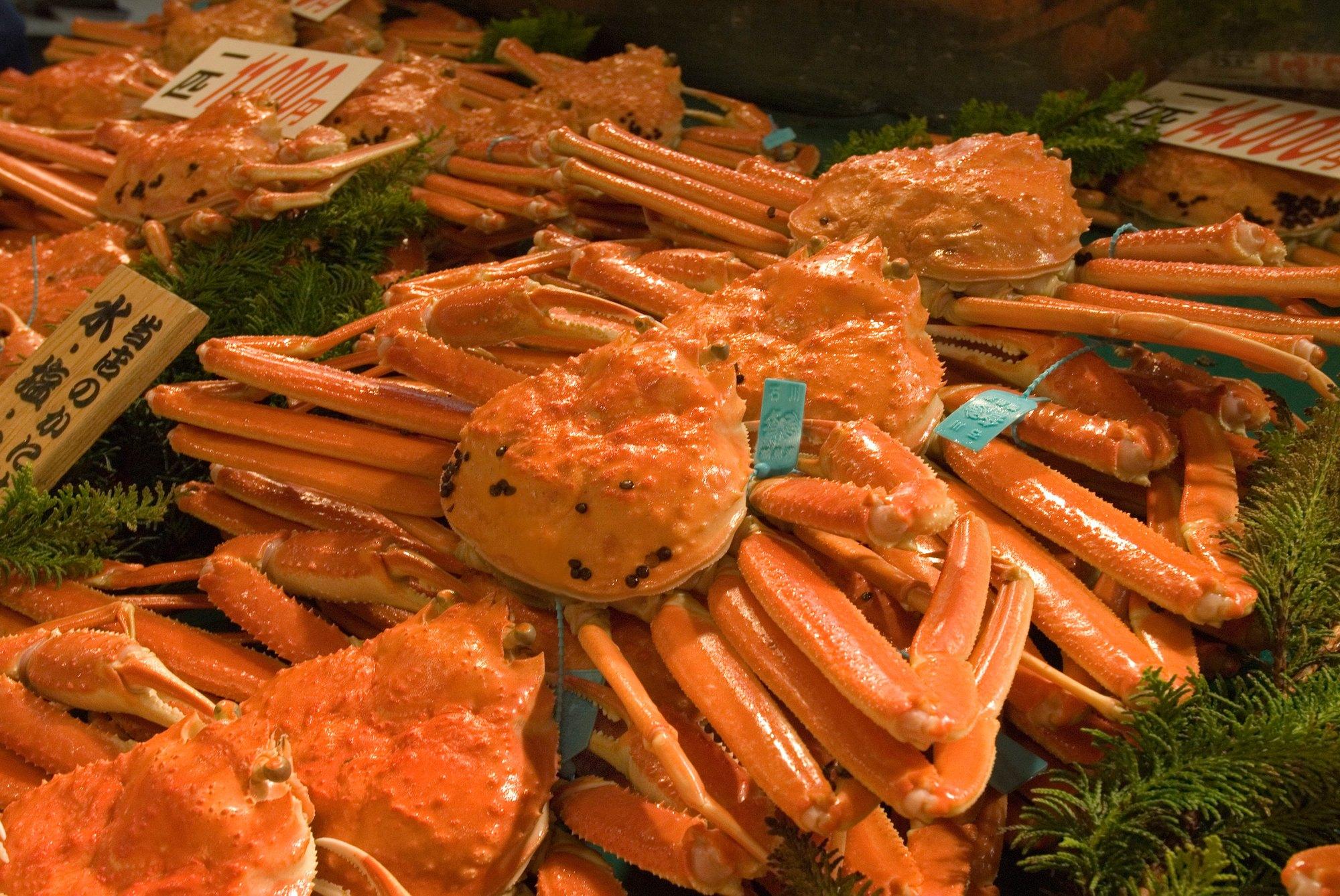
Photo by Kanazawa City. Licensed under ©金沢市. Kanazawa City tourism photo library (加能ガニ1). Resized for web.
Snow-crab fishing in Ishikawa opens on November 6. By the next morning, boiled red shells usually fill Omicho Market, the covered arcade where Kanazawa shops for dinner. For 2026, the male brand, kanō-gani, runs through March 20, 2027. The female brand, kōbako-gani, ends December 29. If you want both on one trip, come before New Year.
One day works if you keep it tight. Taste at the market while the stalls still have crab, leave the afternoon open, then sit for one reserved crab dinner. Kenrokuen and the tea houses can wait for another morning.
Names on the menu
Zuwai is the crab itself. In Ishikawa, the large male is kanō-gani, and a light blue tag on the leg marks a local landing. The smaller female is kōbako-gani. On a plate you will also meet kanimiso, the rich paste in the shell; uchiko, the orange inner roe; and sotoko, the grainy outer eggs under the female’s apron. Locals chase kōbako for those eggs while the short season lasts.
The cooking words show up on stall boards and course menus alike. Yude-gani is boiled. Yaki-gani is grilled. Kani-sashi is sashimi. Kani-shabu is a quick dip in hot broth. Kani-men is the winter oden topping made from kōbako, and it appears in Kanazawa oden shops while the female fishery is open. Kani-zukushi is a crab-heavy progression: sashimi, something hot, something grilled or fried, then rice or porridge.
Morning at Omicho
Omicho is a short bus ride from Kanazawa Station, or about a twelve-minute walk, at the Musashigatsuji stop. The market as a whole is often listed around 9 a.m. to 5 p.m. on weekdays and Saturdays, with earlier closing on Sundays and holidays. Fishmongers set their own hours, and some close midweek. Arrive near opening if you want the boiled piles still high.
Walk the crab counters first. Look for the blue tags on kanō-gani. Ask whether a crab is local, boiled, or live, and whether the price is per crab or per box. Stall prices move with the day’s catch. Recent local guides put kōbako roughly in the hundreds to low thousands of yen each, and kanō from a few thousand into the tens of thousands for large tagged crabs. Trust the tag in front of you.
For a seated stop without giving up the whole morning, Omicho Shokudo, inside the market at Aokusa-cho 1, serves a seasonal kōbako-don while the female fishery is open. Kanazawa’s tourism board lists it from ¥3,700 with two crabs’ worth of meat, from November 7 through December 29. The restaurant’s Hot Pepper page currently marks the same bowl as market price. Call, or read the board, before you sit. If the don is gone, a boiled kōbako from a stall, or a sushi counter gunkan with meat and roe, still gets you the morning crab.
One reserved dinner
Book dinner before you leave home. Crab courses fill once the tags hit the ice. Upstairs from the market, Shunsai Washoku Kouful sits on the second floor of Omicho Ichiba-kan. As of mid-November 2026, its reservation site lists a seven-course kani-zukushi set at ¥17,380 and a nine-course set at ¥20,680. The longer one includes kōbako or boiled crab. The seven-course listing runs through crab sashimi, shabu, grilled crab, a fried course, rice porridge, and dessert. Dinner runs roughly 5 to 10 p.m., with last order at 9:30. The restaurant is closed Tuesday.
Those are the published prices on the shop’s course page today. Weather and landings still decide what arrives, and kitchens rewrite boards without a press release. Before you lock the reservation, confirm the date, the set name, the tax-included total, and whether kōbako is still on. If Kouful is full, Kanazawa’s 2026 crab dining guide lists other reserved rooms with published floors in a similar band, from market-side sets into the ¥20,000s and higher at specialty counters. Call the restaurant.
Leave a quiet stretch between the market and dinner. Walk Kenrokuen if the gates are open, or sit for oden with kani-men while kōbako lasts. Keep lunch light enough that sashimi and shabu still taste like dinner.
How the season shifts
From November 7 through late December, the city sells both brands. That is the stretch for a kōbako tasting at lunch and a kanō course at night. After December 29, plan around kanō-gani. The cooking words stay the same. The female eggs leave the board.
Storm days thin the stalls. If the market looks sparse, keep the dinner reservation and skip buying a whole crab to carry home. One bowl or one plate in the morning, then the reserved course at night, is still a full crab day.