
Yuzu Juice, Yuzu Ponzu, or Yuzu Kosho? What to Buy for the Dish You’re Making
Fresh yuzu peaks in winter. At the store, juice, ponzu, and kosho share the fruit’s name and do three different jobs.
Updated November 19, 2026
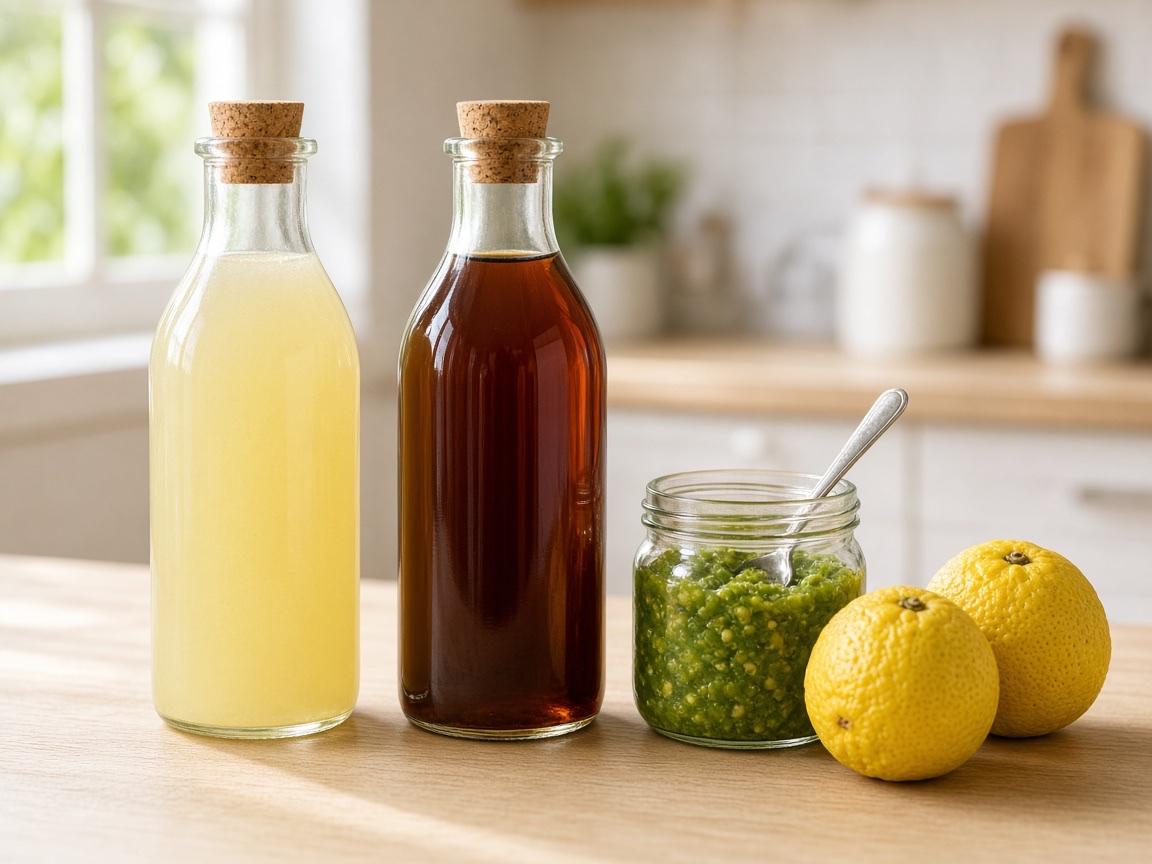
Photo by East Table. Licensed under Editorial. AI-generated editorial illustration of yuzu juice, ponzu, and kosho; no brand logos.
Yellow yuzu shows up in Japan in November. Kochi grows a large share of the crop, and Japan’s agriculture ministry notes that fruit from the prefecture gets pressed into ponzu as the season peaks. Walk the condiment aisle of a North American Japanese grocery and the same fruit name sits on three products: juice, ponzu, and kosho.
Juice is citrus. Ponzu is a seasoned sauce. Kosho is a salty chili paste with yuzu peel. Buy the one that fits tonight’s dish.
How to read the label
Look at the word after yuzu. 果汁 (kajū) means juice. ポン酢 or ponzu means a citrus seasoning, often built on soy. 柚子胡椒 or yuzu kosho means the chili paste. Then read the ingredients in order.
A pure juice bottle can list almost nothing else. Yakami Orchard’s retail listing, for example, names only citrus yuzu juice. A ponzu bottle usually leads with soy sauce. The ministry distinguishes older citrus-and-vinegar ponzu from ponzu soy sauce that may include soy, yuzu juice, mirin, and a broth of kombu and bonito. Kikkoman’s U.S. Yuzu Ponzu lists soy sauce first, then water, sugar, vinegar, salt, yuzu juice, and lemon juice concentrate, with wheat in the soy. If you want a dip without fish stock, scan for bonito or katsuobushi. If you avoid wheat, check the soy line.
A kosho jar often lists just a few ingredients. Fundodai’s Kyushu paste names yuzu peel, chili pepper, and salt. Nippon.com describes the green classic as grated peel from unripe yuzu with chopped green chili and salt. Red and yellow jars exist too. None of them are black pepper. In Kyushu, kosho can simply mean chili.
Yuzu juice: finish a dressing
Reach for juice when you want bright acid and aroma without soy or chili. Eyes & Hour’s bottled-juice guide says to add yuzu near the end of cooking, or keep it uncooked, so the perfume stays. For a cold dressing, Mai Rice publishes a clear ratio: a tablespoon of yuzu juice, two tablespoons of neutral oil, a half teaspoon of soy sauce, and a pinch of salt. Whisk that and toss it with shredded cabbage, cucumber, and avocado, or spoon it over blanched greens.
If the bottle is 100 percent juice, you control the salt. If the label adds sugar or other citrus concentrates, taste before you season the rest of the bowl.
Yuzu ponzu: make a dipping sauce
Ponzu is the bottle for a salty-tart dip. The agriculture ministry lists it with hot pots such as mizutaki and yudofu, and with sashimi, grilled fish, and chilled tofu. Kikkoman’s glossary adds shabu-shabu, gyoza, and salads. On a weeknight, put a small bowl of yuzu ponzu next to a shabu-shabu pot or a plate of pan-fried dumplings. Grated daikon in the same bowl is the usual partner.
Pour it straight from the bottle if you like. If it tastes harsh, loosen it with a splash of water or a few drops of toasted sesame oil. Do not pour it into a dressing that already has soy and oil unless you cut those back. The bottle is already seasoned.
Yuzu kosho: heat and citrus on grilled vegetables
Reach for kosho when you want peel oils and chili in one dab. Mai Rice suggests starting around half a teaspoon per serving. Char broccoli, eggplant, or thick scallions under a broiler or on a grill pan. While they are hot, smear a thin film of green yuzu kosho on the cut faces, or stir a little into a spoon of oil and brush it on.
The paste is salty. Taste before you reach for more salt or soy. After you open the jar, keep it cold. It will wait for the next fish, hot pot, or bowl of noodles.
Fresh yuzu leaves the produce bin when winter turns. The three jars stay on the shelf. Use juice for a dressing, ponzu for a dip, and kosho when the plate wants a little heat with the citrus.