
What Comes First on the Oyster Sauce
The sauce is oyster broth cooked down with sugar and starch. If oyster extract is the first ingredient, it outweighs the sugar. If water and sugar come first, they outweigh the oyster.
Updated October 18, 2026
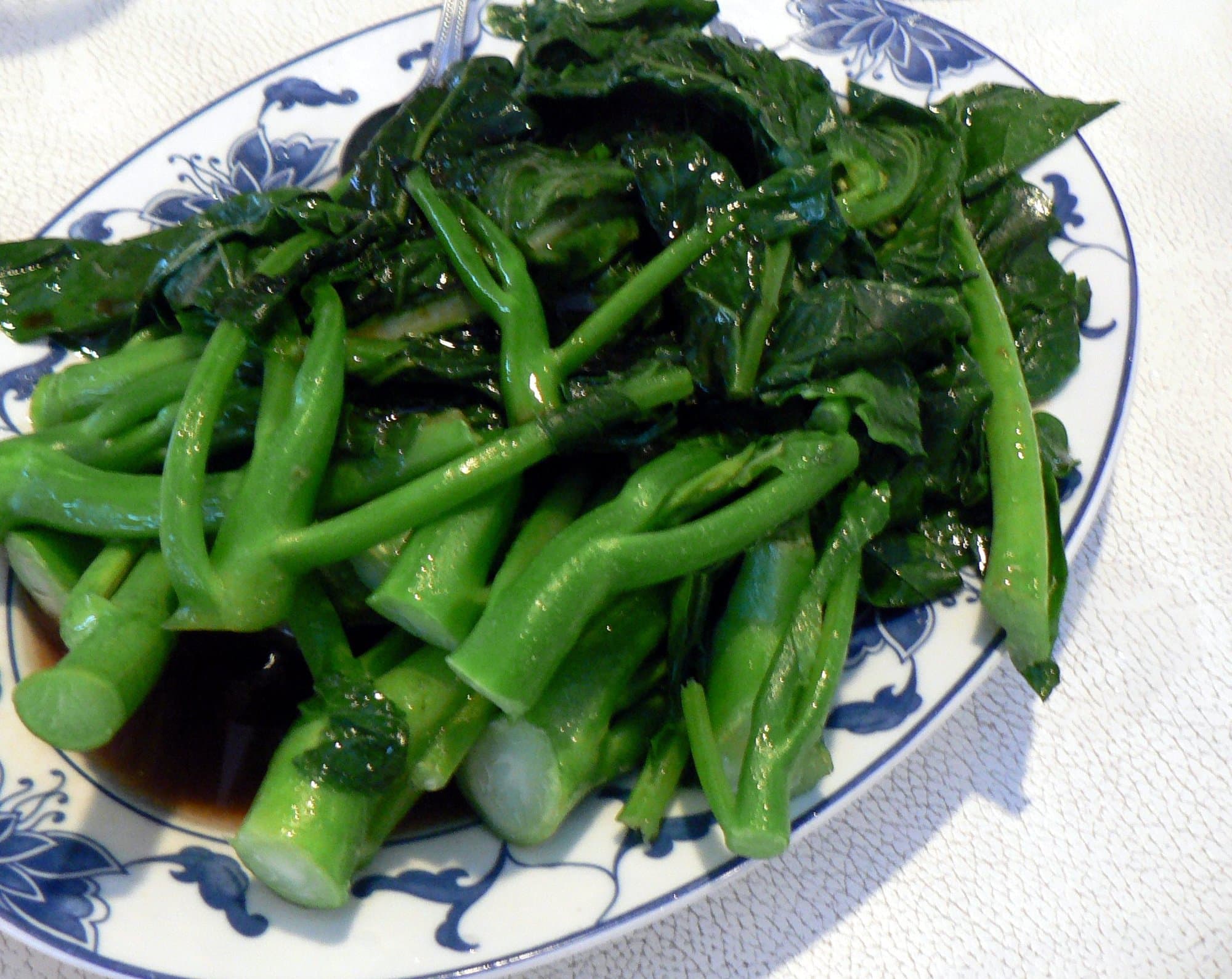
Photo by stu_spivack. Licensed under CC BY-SA 2.0. Chinese broccoli with oyster sauce, 2006. Cropped and resized for web.
Gai lan, Chinese broccoli, goes glossy where the sauce pools. Beef with broccoli takes the same dark spoon.
One bottle says oyster sauce. The next says oyster-flavored sauce. The first ingredient is what weighs most.
What you are pouring started as oysters. China's standard for 蚝油 defines the sauce as juice from oysters that were steamed or boiled and then cooked down, or as oyster meat broken down with enzymes. Sugar, salt, and starch go in after the juice. Starch is what grabs a stalk. The sugar is already in the jar. Pour heavily and the pan goes sweet.
Lee Kum Kee says the sauce began in 1888. Lee Kum Sheung had a teahouse in Nanshui, a coastal town now inside Zhuhai. The company says he forgot a pot of oyster soup, and the soup cooked down to a brown paste he bottled and sold. Take that as their account of the pot.
What comes first
In the United States, ingredients run from most to least by weight. Lee Kum Kee's premium bottle starts with oyster extract, listed as oyster, water, and salt. Sugar and more water come after. The Panda bottle is the one marked oyster-flavored sauce. Water is first, then sugar, then the oyster extractives. Further down, both bottles list MSG, caramel color, and wheat flour.
The company's UK site calls its Panda bottle milder, and its premium bottle the concentrated one. Those words are not on the US bottles, and neither is a percent. Read the order on the one you have.
Where a premium label does print a number, in Europe and the UK, it says 40 percent oyster extract, and it lists that extract as 90 percent oysters, plus water and salt. Australia prints the 40 percent too. That 40 is the extract's share of the jar, and the extract still contains water and salt. The US product page prints neither figure.
China's standard describes a reddish-brown sauce with a cooked-oyster smell and a gloss. It does not ask the company to print how much oyster went in. Both of those US bottles contain wheat flour, the premium one included.
A vegetarian bottle is built on mushroom, and it is often sold as vegetarian oyster-flavored sauce. The front may still say oyster. The ingredient list will not name one. The greens still go dark and glossy. If you avoid shellfish, look for mollusc on the allergen line.
Hoisin sits in the next dark jar. The Chinese name is 海鲜酱. Lee Kum Kee's US hoisin starts with sugar, then water and a fermented soybean paste. Garlic and sesame come further down. That jar has no oyster in it. Use it for a glaze or a dip.
The spoon
Add the sauce near the end of a stir-fry. It is already salty and already sweet, so taste the gai lan before you reach for more soy. A thick bottle needs a splash of water in the pan. In Thailand the sauce is called nam man hoi, and it goes on this same green.
Keep the cap tight. Refrigerate after opening if the label says so. Cold sauce stiffens. A few drops of water in a hot pan loosen the spoon.
To start, we recommend the bottle that lists oyster extract first, for a week of greens and stir-fries. The water-and-sugar bottle will still coat the plate. Sugar outweighs the oyster in that bottle, so keep any other sweetness in the pan small.