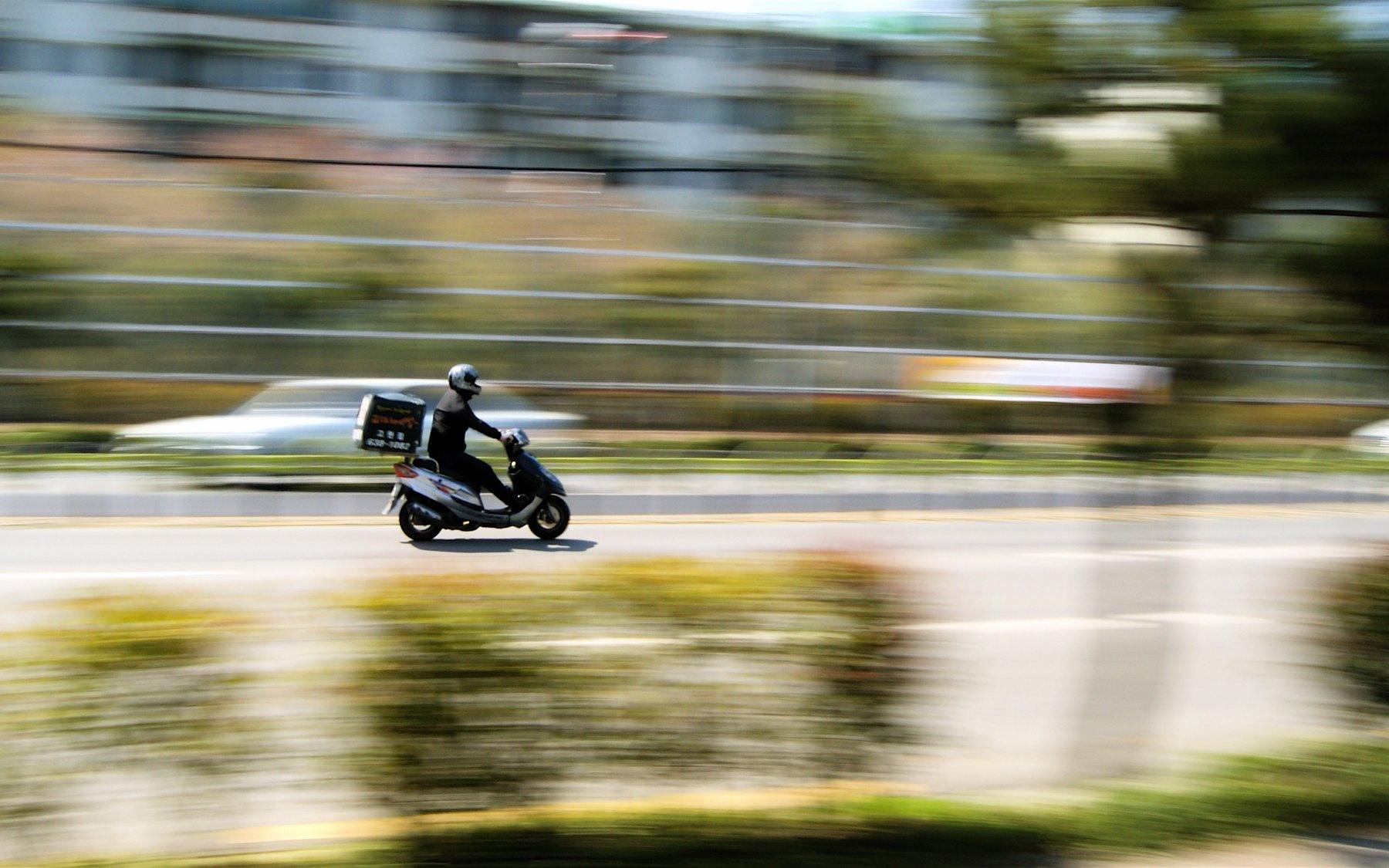
Photo by Lbking. Licensed under CC BY 3.0. Delivery scooter in Geoje, South Korea. Cropped and resized for web.
Korea’s Delivery-App Fines Raise a Basic Question: Who Sets the Menu Price?
Korea’s Fair Trade Commission provisionally fined Baemin and Coupang Eats a combined 631.9 billion won for rules that made restaurants match menu prices across apps. The platforms say the case is wrong. Kitchens and diners already lived with the result.
November 9, 2026
South Korea’s Fair Trade Commission said Monday it will fine Baemin’s operator, Woowa Brothers, 331.1 billion won and Coupang, which runs Coupang Eats, 300.8 billion won. Together that is 631.9 billion won, about $465 million on The Korea Times’s conversion, the same won totals Yonhap carried. The commission decided the case on October 29 and announced it today. Both companies say they broke no law and will decide on lawsuits once the written order lands.
What the FTC objects to is how the apps treated restaurants that sell on more than one channel. From July 2023 through January 2026, Coupang told partners to keep menu prices, minimum orders, discounts, and related terms on Coupang Eats at least as good as on rival apps. Miss the mark and the restaurant lost “Wow store” status, the label that unlocks delivery benefits for Coupang Wow members. Baemin followed from May 2024 through October 2025 with Baemin Club stores, tying Club benefits to matching prices, minimums, and discounts. Chosun Biz boiled it down to a bowl of chicken: if it cost 20,000 won on one app, the platforms did not want it cheaper on another.
Most kitchens complied because the alternative hurt. Yonhap, citing the FTC, said Wow stores rose from about 13 percent of partners in mid-2023 to about 94 percent by late 2025. Baemin Club stores climbed from about 63 percent to about 80 percent. Korean coverage of the investigation put the daily sales hit for restaurants dropped from those programs near 60 percent for Wow and near 70 percent for Club. Baemin and Coupang Eats already took 58.45 percent and 34.44 percent of delivery-app order value in 2025. Standing commissioner Hwang Won-chul told reporters the twin rules looked close to collusion. Commissions stayed high. Terms moved together. A smaller app with a lower fee had little room to undercut.
That squeeze showed up in the kitchen first. Herald Business reported that Baemin raised its own-delivery brokerage commission from 6.8 percent to 9.8 percent in August 2024, matching Coupang Eats. Around that period, the FTC found menu prices up about 0.9 percent on Baemin own delivery, 0.7 percent on store delivery, and about 1 percent on Coupang Eats. Coupang’s average minimum order rose 4.3 percent, from 15,338 won to 16,003 won. Baemin’s rose 1.3 percent. JoongAng Ilbo and Aju Press cited another FTC estimate: on a 25,000-won order, Coupang’s most-favored demands lifted Baemin prices by 350 won on own delivery and 1,650 won on store delivery. Free delivery for members still looked cheap at checkout. The bowl underneath it got a little dearer, and the floor to place the order moved up with it.
The regulator’s argument is that the apps sold lower fees to diners while stopping restaurants from posting cheaper menus on lower-commission rivals. Baemin’s fine also covers two related findings. The commission said the company pushed restaurants toward higher-fee own delivery, and that estimated delivery times on the app made store delivery look slower than it was. Those counts account for 155.4 billion won and 15.4 billion won of Baemin’s surcharge. Coupang’s entire 300.8 billion won is for the most-favored rules. Herald Business noted Coupang’s amount was raised 20 percent for a prior violation record. Baemin’s was cut 20 percent for cooperating.
Woowa Brothers says the FTC got it wrong. In statements carried by Chosun Biz and Yonhap Infomax, the company argued there was no illegality. Baemin Club, it said, arrived as a defense after a rival’s membership rules remade the market in about a year, and most Club stores were chosen without Baemin rewriting merchant prices. Own delivery is about quality, riders, and customer service, Woowa added, and store delivery still leaves Baemin a larger margin per order. The company will review the written decision and consider an administrative suit.
Coupang is fighting the size of the number. Aju Press and Chosun Biz quoted the company calling Wow stores a voluntary free-delivery promotion that grew restaurant sales. Coupang Eats held only about 7 percent share when the terms began in 2023, the company said, and the fine base pulled in restaurant revenue Coupang never touched. An October review report had put the surcharge in a 25-to-42-billion-won range; the final figure jumped to 300.8 billion won after the calculation widened. Coupang also pointed to an earlier Yogiyo surcharge of 468 million won. “We plan to carefully review the final written decision and fully present our position through proper legal procedures,” a Coupang representative said.
The fines are still provisional. Corrective orders, the FTC says, should let restaurants set prices and minimums by channel again, and give smaller apps a cleaner fee fight. Lawsuits may land first. For kitchens listing the same dish on two apps, the practical question is still who sets that price.