
Red or Green Yuzu Kosho? Pick the Jar Based on What You’re Cooking
Green runs hotter; red carries more aroma, Japan’s agriculture ministry says. Fundokin’s two Ōita jars already ship to North America. Open them for broth, grilled mushrooms, and eggs.
Updated November 20, 2026
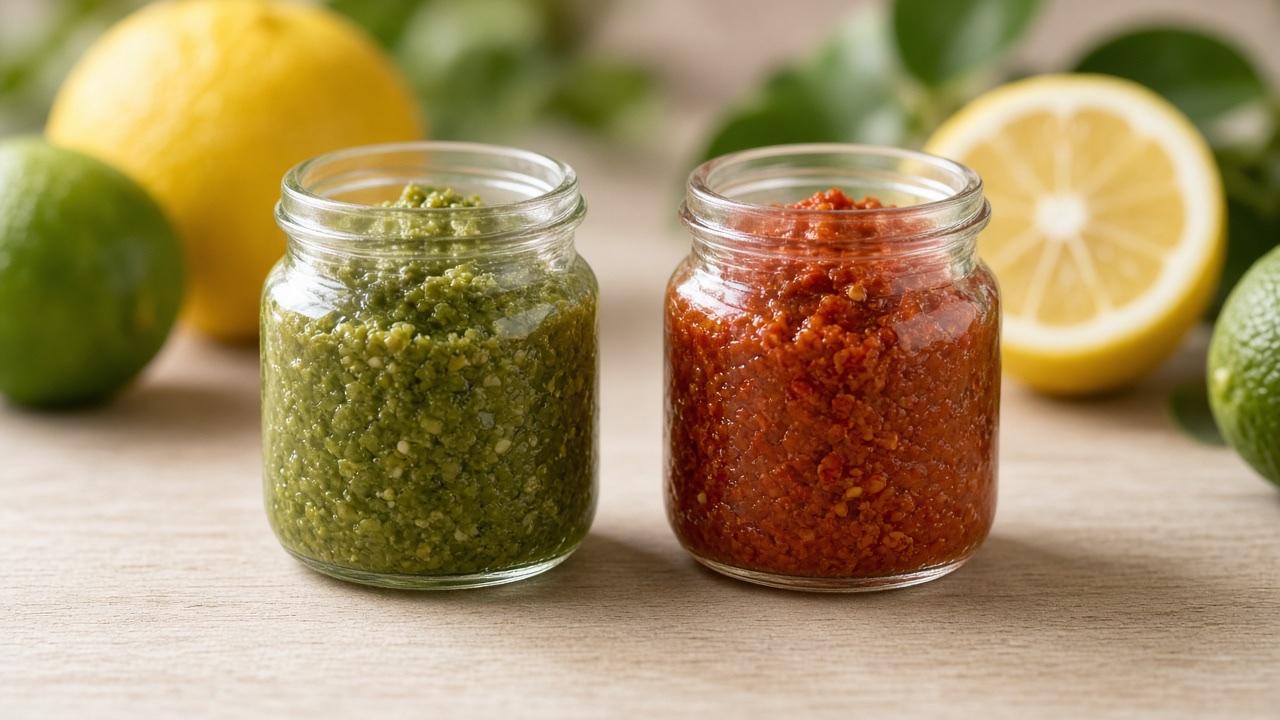
Photo by East Table. Licensed under Editorial. AI-generated editorial illustration of green and red yuzu kosho; no brand logos. Fundokin’s official red-and-green still is 311px; shop pack shots top out near 800–1364px single-SKU; MAFF’s primer photo is 4K but green-only.
At a Japanese grocery the two jars sit next to each other. One paste is olive green. The other is a rusty red. Both say yuzu kosho. Both smell like citrus and chili. Which lid you open depends on dinner.
Japan’s agriculture ministry, in its regional-cuisine notes on Kyushu yuzu gosho, draws a simple line. Green jars generally run hotter. Red jars generally carry more aroma. Buy for the plate in front of you.
What the paste is
Yuzu kosho is grated yuzu peel, chili, and salt, worked into a paste. The name can confuse English readers. Kosho usually means black pepper. In parts of Kyushu it means chili, which is why the jar has no black pepper in it. The ministry’s English primer lists green chili and green yuzu as the classic pair, and notes that red chili shows up too.
Ōita helps explain why both colors exist. The ministry’s Ōita notes on boiled yuzu peel call the prefecture a major producer. Green fruit starts shipping in late August. Yellow fruit follows around November. Much of what leaves the prefecture becomes juice or yuzu kosho. Green kosho is unripe peel with green chili. Red kosho waits for yellow peel and red chili. Three ingredients either way. The harvest decides which jar you get.
Two jars you can buy here
Fundokin, the soy sauce house in Usuki, Ōita, bottles both colors in 50-gram glass jars that already reach North America. The green jar, Ao Yuzu Kosho, lists green yuzu peel, green chili, and salt. The company describes a bright yuzu smell and a sharp chili bite. Amazon and specialty Japanese retailers stock it.
The red jar lists yellow yuzu peel, salt, and red chili. Fundokin calls the yuzu calmer and the red chili a milder prickle. Japanese Taste and Weee list the same 50-gram jar for U.S. shipping. Stock moves, so check before you drive across town.
Both pastes are salty. After you open either jar, keep it cold and use a clean spoon. Heat knocks the citrus oils flat, so add the paste at the end, or dissolve it in a small bowl at the table.
Broth: start with green
Clear chicken pot, yudofu, or a quiet bowl of udon wants the green jar. Put a little paste in your own dipping broth or in the noodle bowl, not in the communal pot. Agriture’s kitchen notes suggest about a quarter teaspoon worked loose with chopsticks, or even less in a mild soup. A little green heat brightens the liquid without making the whole table spicy.
If the broth is already salty, taste before you add soy. The paste brings salt with the citrus.
Grilled mushrooms: reach for red
Thick mushrooms take the red jar well. Char king oyster, shiitake, or portobello on a grill pan or under a broiler until the faces brown. While they are still hot, mash a small dab of red yuzu kosho into a spoon of soft butter and let it melt over the caps. Aki Foods’ everyday yuzu notes point to the same move: kosho butter over roasted mushrooms.
The red paste’s rounder chili and deeper peel aroma sit comfortably next to the browned mushroom. The green jar’s grassy bite is sharper here, so save it for another night. Start with less than you think. You can always add another smear.
Eggs: a green dab is enough
Eggs take almost nothing. Set a soft-boiled egg or a fried egg over rice. Put a pea-sized dab of green yuzu kosho beside the yolk, or fold a little into soft scrambled eggs in the last half minute off the heat. Aki Foods keeps the same scale for breakfast: a pea for one or two eggs.
The green chili and unripe peel cut through the yolk the way wasabi cuts through sashimi fat. The red jar works on eggs too if that is what you already opened. If you are new to the paste, start with green.
To start, we recommend Fundokin’s green jar if your week looks like soup, noodles, and eggs. Add the red jar when mushrooms, richer fish, or a miso pot are on the calendar. One color covers plenty of dinners. Keep both if you cook from both ends of that list.